What Is a Physical Pension?
Strength, fitness and confidence are assets, not achievements. What they're actually for, and what happens if you neglect them.
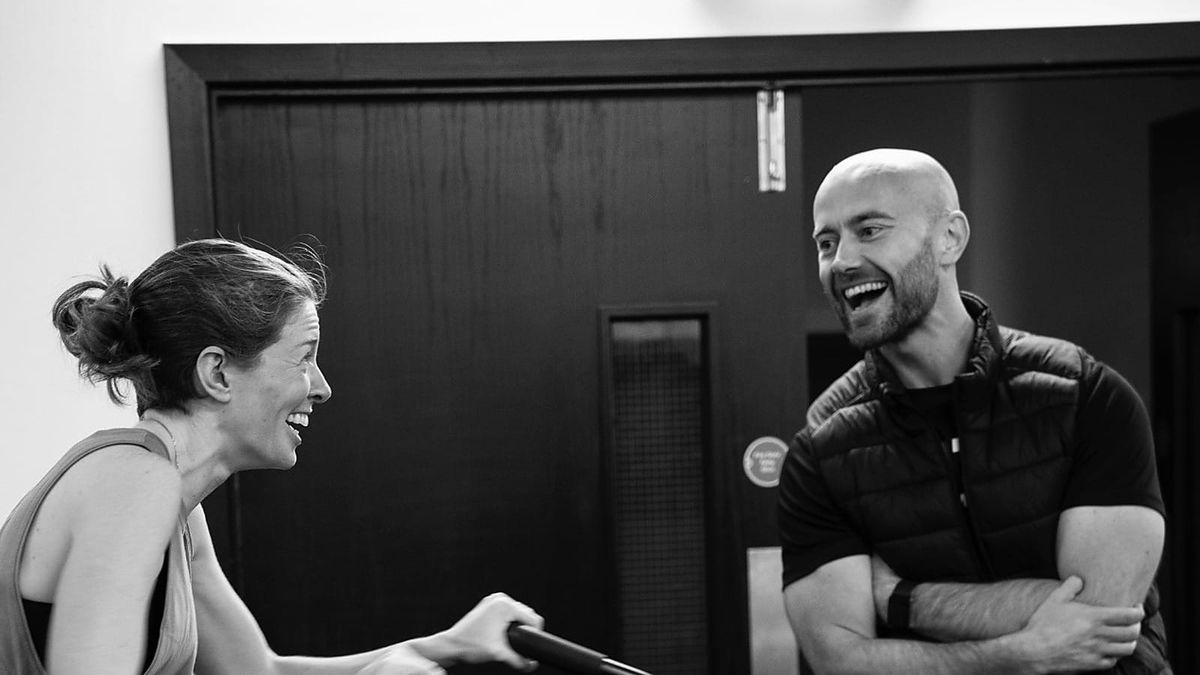
The strength, fitness and confidence you build now become the options you keep later.
There is a particular moment a lot of people over forty recognise, even if they have never said it out loud.
You are carrying something upstairs—a suitcase, a box, a sleeping toddler—and halfway up you notice your breathing has changed.
Or you are getting out of a low chair and your body needs a second to organise itself before it will stand.
Or a friend suggests a hike, and before you have even considered whether you want to go, some quieter part of you has already run the numbers on whether you could.
Nothing dramatic has happened. Nothing is technically wrong.
But something has been quietly renegotiated, and you were not in the room when it happened.
Most people respond to that moment in much the same way: I should probably lose some weight. Get back to the gym. Eat a bit better.
It is not a bad instinct. But it is aimed at the wrong target.
Weight and appearance may be what the moment on the stairs makes you notice. They are not what the moment on the stairs is actually about.
The idea
I think of physical capacity as a pension.
Strength, fitness, muscle, mobility and confidence are assets. You build them through repeated contributions over time—mostly unremarkable training sessions, done consistently enough for their effects to accumulate.
Over time, you are generally doing one of three things: building that capacity, maintaining it, or allowing it to erode.
Sometimes the erosion happens through neglect. Sometimes illness, injury or circumstances do the withdrawing for us. Either way, the consequences are rarely obvious at first.
Most people do not suddenly fall apart at sixty.
What usually happens is quieter and begins much earlier: years of reduced activity or insufficient training, followed by a moment when life asks you to draw on a reserve that is no longer there.
The pension is not a metaphor for looking good.
It is a way of describing what is actually at stake. Your options.
What it is actually for
Very few people train because they are deeply invested in the finer details of a Romanian deadlift.
They train because of what a stronger, fitter body allows them to do without having to think about it.
Carry your own suitcase through an airport without planning the route around the escalators.
Get down onto the floor to play with a grandchild and get back up without it becoming a small event.
Join friends for a hike without first calculating whether you will be the person who has to turn back.
Move house. Carry the shopping in one trip. Climb the stairs at the end of a long day and not register it as a climb at all.
None of this is dramatic. That is exactly the point.
A physical pension does not primarily pay out in medals. It pays out through the absence of a thousand small negotiations you might otherwise be having with your own body every day, often without realising you are having them.
That is what options mean here. Not achievement for its own sake. The continued ability to say yes.
How it is built
A physical pension has several major assets.
Strength and muscle. Muscle and the ability to produce force help you lift, carry, climb and get yourself up from the floor. These are basic physical competencies. People often fail to appreciate their importance until ordinary tasks begin demanding a meaningful percentage of the strength they have available.
Greater strength creates margin. When an everyday task requires only a small part of your maximum capacity, it feels easy. As your reserve narrows, the same task begins to feel demanding—even though the task itself has not changed.
Cardiovascular fitness. Cardiovascular capacity is not only about running races. It is the ability to move through a full day of ordinary physical life—stairs, walking, travelling, gardening—without your heart rate becoming the main character of the afternoon. It also means retaining some higher-effort capacity for the moments when life genuinely requires you to move quickly.
Power, balance and mobility. Strength matters, but so does the speed at which you can express it. Power helps you react, catch yourself and move decisively. Balance helps you manage uneven ground, unexpected changes and the moments when your body ends up somewhere you did not plan. Mobility gives you access to the positions required to use the strength you possess.
You can have strength on paper and still struggle to use it if your joints, balance or coordination cannot put it where it is needed.
What these assets buy you. The part people often forget does not look like training at all.
Dancing badly at a wedding. A walk that turns into a proper hike. Keeping up with a game you did not expect to play. Travelling somewhere without wondering whether your body will become the main logistical problem.
That is the dividend. It is the reason for building everything else.
The pension is built the boring way
Physical capacity is not built through occasional bursts of heroic effort.
Six punishing weeks followed by six months of inactivity is not investing. It is closer to gambling—and it frequently costs more than it returns.
The pension is built the boring way: consistent, appropriate contributions, repeated for long enough that their effects accumulate.
That does not mean every session must be easy. Training still needs challenge. You need sufficient resistance to build or preserve strength, enough cardiovascular demand to challenge the heart and lungs, and enough progression to keep adaptation occurring.
But hard is not the same as useful.
The right amount of training is not the most you can survive. It is the dose from which you can recover, adapt and return consistently.
The part people get wrong about ageing
Most people assume ageing is a straight line down and that the only available response is to slow the descent as gracefully as possible.
That is the wrong frame.
Some decline is real. Forty is not the same as twenty, and pretending otherwise helps no one. Biology changes. Recovery changes. Injuries accumulate. The margin for poor decisions can become smaller.
But a meaningful proportion of what people experience as inevitable decline is not ageing alone. It is ageing combined with years of insufficient training, reduced activity and gradually lowered expectations.
That distinction matters. If every loss is inevitable, there is little reason to act. If at least part of the decline is modifiable, then your behaviour still has leverage.
The job is not to deny ageing or fight it as though it were a personal failure. The job is to keep making deliberate contributions towards the particular qualities you want your body to retain in ten, twenty or thirty years.
That is a completely different posture. One is passive. The other recognises that, while you do not have total control, you still have meaningful influence.
Maintenance is not failure
If you already train, simply holding your capacity steady from one year to the next is not standing still.
It is success.
Fitness culture is obsessed with visible progress: more weight on the bar, a faster time, a lower body-fat percentage. But maintaining muscle, strength and aerobic fitness across decades is an achievement in itself. If you are as capable at fifty-one as you are at forty-one, that is not a ten-year plateau.
It means you have resisted the forces that cause most people's capacity to contract.
There may be seasons when you build. There will be seasons when you maintain. There may also be periods when illness, injury or life circumstances cause a drawdown and the task becomes rebuilding.
All three belong in a realistic lifetime of training.
What are you saving for?
A financial pension has a future purpose. A physical pension should too.
You may want to travel without worrying about whether you can manage the walking. You may want to continue playing sport, running, cycling or climbing. You may want to get onto the floor with your children or grandchildren—and stand up without planning the manoeuvre in advance. You may want to remain useful to the people you care about. You may simply want the confidence that, when life asks something physical of you, your body will not immediately become the limiting factor.
That is why training has to connect to a life outside the gym.
A bigger squat can be useful. A faster 5K can be useful. More muscle can be useful. But those measures matter because of what they allow—not because the gym itself is the final destination.
The goal is not to become excellent at exercising. It is to build a body that leaves more of your life available to you.
Am I paying in?
You do not need the perfect programme to begin answering that question.
You need to ask it honestly, on an ordinary Tuesday, about your ordinary week.
A physical pension is the strength, fitness and confidence you build now so that you retain more freedom and more options as you age. That is the whole idea in one sentence.
Underneath it is a more uncomfortable question: is the way you are living and training now making a contribution to the life you want later? Or has your capacity, without anyone consciously deciding that it should, begun to erode?
Many people already suspect the answer. They simply have not asked themselves the question directly, because lose weight and get fit never required them to.
My own first contribution was a run from my house in Mackintosh Park towards a pub called the Magic Carpet and back again. I was thirteen or fourteen. I had no plan, no coach and no understanding of what that run might become. I certainly was not thinking about ageing well. I only knew that I wanted to change something, and running was the action available to me.
That run led to kickboxing, martial arts, strength training, coaching and eventually a career spent helping other people build their own capacity.
Looking back, it was the first deposit in something I did not yet have the language to describe.
Your next deposit does not need to be impressive either. It only needs to be appropriate—and repeated.
The question is not whether ageing is happening. It is whether your ordinary week is helping to fund the life you still want to be living when it does.
The Physical Pension is the idea behind my work at Elite Gym and the questions I explore in these essays.
Visit Elite Gym ↗ · Read more essays ↗